Dialectical Behavior Therapy (DBT) was designed for people who feel things intensely and don’t have great models for coping with those feelings. If that’s you, you’re not alone—and you don’t have to reinvent the wheel. There are excellent DBT resources out there, and many of them are free. The challenge is just knowing where to look.
The skills in DBT are learnable. They take practice. They take repetition. But they’re doable. And they work.
Let’s get into it.
20 Free DBT Resources
Disclaimer: The resources listed in this post are created and owned by their respective authors and organizations. I did not create these materials, and this post is not affiliated with or sponsored by any of the sites or creators referenced. Please use these materials responsibly and respect all copyright and licensing terms. When in doubt, refer back to the original source for use guidelines and attribution requirements.
DBT Self Help | Self-serve resources for the DBT community Dialectical Behavioral Therapy (DBT) is an evidence-based psychotherapy that combines Cognitive Behavioral Therapy with Zen Buddhism. Created by Marsha Linehan, it was originally used to treat Borderline Personality Disorder (BPD). Now it is used to treat many different emotional dysregulation and impulse control disorders and symptoms.
Free Resources | Online DBT Skills Free videos and downloads to help you learn or strengthen your Dialectical Behavior Therapy (DBT) skills knowledge and support your mental health.
6-Module DBT Course | An educational course designed for professionals to learn the basic principles for the diagnosis and treatment of borderline personality disorder. There are six 20-minute modules.
DBT skills take practice, patience, and repetition—but they’re learnable. The resources here are a starting point, not a finish line. Take what’s useful, leave what isn’t, and keep going. Building emotional regulation is a process, and you’re doing the work just by showing up.
Resilience isn’t about avoiding hardship—it’s about growing through it. Whether you’re navigating personal loss, chronic stress, or just trying to stay afloat in a chaotic world, developing emotional resilience can make all the difference. To support your journey, I’ve compiled a list of free resilience workbooks for teens and adults—resources designed to help you build mental strength, emotional flexibility, and healthier coping skills. These guides are ideal for individuals, therapists, educators, or anyone looking to cultivate a stronger sense of inner calm and grit.
“Life doesn’t get easier or more forgiving, we get stronger and more resilient.”
–Steve Maraboli
Please note: These are external resources and are not affiliated with my site. Be sure to review each for suitability, and as always, follow all copyright guidelines when using or sharing materials.
Hard knocks, misfortune and adversity are things all humans have in common. We all are asked to cope with difficult times at some point in our life. Resilience is defined as the ability to adapt well in the face of adversity, trauma, loss or significant stress, bounce back from it and learn from it.
This resource is an initiative of Glasgow CHP South Sector Youth Health Improvement team developed in partnership with The South Strategic Youth Health and Wellbeing Group. This Emotional Resilience Toolkit provides practical guidance in promoting the resilience of young people as part of an integrated health and wellbeing programme. The resource is designed to be used by workers and volunteers working with young people aged 10 and over.
This workbook provides a practical and entirely educational approach to improve personal resilience. The material is organized as a series of resilience exercises that support World Health Organization recommendations for suicide prevention. The exercises and the learning methods develop problem solving abilities and bring awareness to the importance of social support by applying positive coping skills to create less stressful outcomes to real life challenges. The materials can be used with all audiences to include organizations, educational settings, and families.
The Resiliency Toolkit is a comprehensive, evidence-informed workbook featuring 73 tools and worksheets designed to help people develop the emotional, mental, and behavioural skills needed to overcome life’s challenges. Created by Angela M. Doel, MS, this resource blends therapeutic techniques from CBT, ACT, solution-focused therapy, and positive psychology to support individuals in becoming more resilient, hopeful, and emotionally well.
The simplest way to define resilience is the ability to “bounce back” from life’s difficulties – to adapt well in the face of adversity or significant sources of stress, such as family and relationship issues, major health problems or financial hardships.
“Resilience is not what happens to you. It’s how you react to, respond to, and recover from what happens to you.”
– Jeffrey Gitomer
Supplementary Materials
Disclaimer: The following supplementary materials are intended to be used exclusivelyin conjunction with corresponding workbooks which must be purchased separately. They are designed to support the content and exercises within the workbooks and are not intended to be a standalone resource. Unauthorized distribution, reproduction, or use of these materials without the accompanying workbook is prohibited. Please respect copyright and intellectual property laws.
For highly-rated resilience guides and workbooks that can be purchased on Amazon, see below:
4.7 stars on Amazon, 1,961 reviews
Publisher’s description on Amazon: NEW YORK TIMES BESTSELLER A masterpiece of warrior wisdom: how to be resilient, how to overcome obstacles not by “positive thinking” or self-esteem, but by positive action. The best-selling author, Navy SEAL, and humanitarian Eric Greitens offers a self-help book unlike any other. “Eric Greitens provides a brilliant and brave course of action to help navigate life’s roughest waters.”—Admiral Mike Mullen, seventeenth chairman of the Joint Chiefs of Staff In 2012, Eric Greitens unexpectedly heard from a former SEAL comrade, a brother-in-arms he hadn’t seen in a decade. Zach Walker had been one of the toughest of the tough. But ever since he returned home from war to his young family in a small logging town, he’d been struggling. Without a sense of purpose, plagued by PTSD, and masking his pain with heavy drinking, he needed help. Zach and Eric started writing and talking nearly every day, as Eric set down his thoughts on what it takes to build resilience in our lives. Eric’s letters — drawing on both his own experience and wisdom from ancient and modern thinkers — are now gathered and edited into this timeless guidebook. Greitens shows how we can build purpose, confront pain, practice compassion, develop a vocation, find a mentor, create happiness, and much more. Resilience is an inspiring meditation for the warrior in each of us. “This book is a gift not only to Greitens’s comrades-in-arms, but to readers everywhere.”—Publishers Weekly, starred review
4.6 stars on Amazon, 1,415 reviews
Publisher’s description on Amazon: These days it’s hard to count on the world outside. So it’s vital to grow strengths inside like grit, gratitude, and compassion—the key to resilience, and to lasting well-being in a changing world. True resilience is much more than enduring terrible conditions. We need resilience every day to raise a family, work at a job, cope with stress, deal with health problems, navigate issues with others, heal from old pain, and simply keep on going. With his trademark blend of neuroscience, mindfulness, and positive psychology, New York Times bestselling author Dr. Rick Hanson shows you how to develop twelve vital inner strengths hardwired into your own nervous system. Then no matter what life throws at you, you’ll be able to feel less stressed, pursue opportunities with confidence, and stay calm and centered in the face of adversity. This practical guide is full of concrete suggestions, experiential practices, personal examples, and insights into the brain. It includes effective ways to interact with others and to repair and deepen important relationships. Warm, encouraging, and down-to-earth, Dr. Hanson’s step-by-step approach is grounded in the science of positive neuroplasticity. He explains how to overcome the brain’s negativity bias, release painful thoughts and feelings, and replace them with self-compassion, self-worth, joy, and inner peace.
4.5 stars, 2,074 reviews
Publisher’s description on Amazon: In Do Hard Things, Steve Magness beautifully and persuasively reimagines our understanding of toughness. This is a must-read for parents and coaches and anyone else looking to prepare for life’s biggest challenges.”—Malcolm Gladwell, author of Outliers and Talking to Strangers and host of the Revisionist History podcast. From beloved performance expert, executive coach, and coauthor of Peak Performance Steve Magness comes a radical rethinking of how we perceive toughness and what it means to achieve our high ambitions in the face of hard things. Toughness has long been held as the key to overcoming a challenge and achieving greatness, whether it is on the sports field, at a boardroom, or at the dining room table. Yet, the prevailing model has promoted a mentality based on fear, false bravado, and hiding any sign of weakness. In other words, the old model of toughness has failed us. Steve Magness, a performance scientist who coaches Olympic athletes, rebuilds our broken model of resilience with one grounded in the latest science and psychology. InDo Hard Things, Magness teaches us how we can work with our body – how experiencing discomfort, leaning in, paying attention, and creating space to take thoughtful action can be the true indications of cultivating inner strength. He offers four core pillars to cultivate such resilience:
Pillar 1: Ditch the Façade, Embrace Reality
Pillar 2: Listen to Your Body
Pillar 3: Respond, Instead of React
Pillar 4: Transcend Discomfort
Smart and wise all at once, Magness flips the script on what it means to be resilient. Drawing from mindfulness, military case studies, sports psychology, neuroscience, psychology, and philosophy, he provides a roadmap for navigating life’s challenges and achieving high performance that makes us happier, more successful, and, ultimately, better people.
Additional Therapist-Recommended Resources for Resilience
When most people think of therapy, they picture sitting in an office talking to a psychotherapist. But healing doesn’t always look like a conversation across a couch. While traditional talk therapy is incredibly effective, many people also find relief and growth through non-traditional therapy and alternative approaches.
If you’ve ever felt like talk therapy wasn’t quite enough—or you’re simply curious about what else is out there—this post will walk you through several non-traditional therapy alternatives that support mental health and overall well-being.
Digital Non-Traditional Therapy Alternatives
Sometimes, the biggest barrier is access. That’s where digital platforms can help as non-traditional therapy alternatives.
Headway connects you with therapists who take your insurance—removing one of the biggest hurdles people face.
BetterHelp and Talkspace offer flexible, online therapy that fits into busy schedules.
Online-Therapy.com combines live sessions with structured worksheets, making it a more hands-on, skill-based option.
These platforms expand therapy beyond a once-a-week session and can be more accessible for people who want affordable, convenient care.
Mind-Body Practices
Our bodies hold stress and trauma, so healing isn’t always about words—it’s also about movement and stillness.
Calm or Headspace can introduce daily mindfulness practices to reduce stress.
Insight Timer offers free meditations as well as paid programs with expert teachers.
Yoga platforms like Alo Moves or Glo help people reconnect with their bodies through breath and movement.
These practices support nervous system regulation, which is often the foundation for deeper healing.
Creative & Expressive Therapies
For some, the path to healing is artistic expression.
Platforms like Skillshare and CreativeLive offer classes in painting, writing, photography, and more.
Journaling programs and art-based workshops provide structured ways to process emotions without relying solely on words.
Self-expression can unlock emotions that are hard to articulate, making creativity a powerful therapeutic tool.
Lifestyle & Holistic Wellness
Mental health is deeply tied to sleep, nutrition, and daily habits. Apps and programs designed for whole-person wellness can provide the missing puzzle piece.
BetterSleepfocuses on improving rest, which directly impacts mood.
Noom Mood uses CBT-based techniques to manage stress and anxiety.
Devices like Muse orApollo Neuro use biofeedback to help retrain your brain and body’s response to stress.
Free Non-Traditional Therapy Alternatives: Evidence-Based Self-Help & Mental Health Websites
These are also great resources, including this site, for evidence-based workbooks, worksheets, and psychoeducation, often free or low-cost.
Some approaches may not be mainstream (yet) but are gaining traction:
Ketamine-assisted therapy (in approved clinics) shows promise for treatment-resistant depression.
Neurofeedback and biofeedback offer cutting-edge ways to change brain patterns.
Hypnotherapy platforms (like Grace Space) guide users into deep relaxation and change work.
While these approaches aren’t for everyone, they highlight just how many avenues there are beyond talk therapy.
Final Thoughts
Healing isn’t one-size-fits-all. For some, traditional therapy is enough. For others, combining it with mindfulness, creative practices, holistic wellness tools, or other non-traditional therapy approaches makes all the difference.
If talk therapy hasn’t clicked for you—or if you’re looking to enhance your current treatment—consider trying one of these non-traditional therapy options. Sometimes the most powerful healing happens in unexpected ways.
Disclaimer: A few of the links on this page are affiliate links. This means I may earn a small commission—at no extra cost to you—if you choose to make a purchase or sign up through them. These funds go directly toward keeping this site up and running. Please note that I do not specifically endorse any product, service, or organization listed here. The links are provided only as potential resources that may be helpful for your mental health and wellness journey.
Guiding with Purpose: A Self-Discovery Workbook for Counselors is on its way, and it’s full of helpful tools to make therapists feel stronger, more skilled, and more connected to
their work.
Great news for therapists and counselors! A new book is coming soon that will help mental health professionals learn, grow, and feel more confident in their work. Guiding with Purpose: A Self-Discovery Workbook for Counselors by Cassie Jewell, M.Ed., LPC, LSATP, is on its way, and it’s full of helpful tools to make therapists feel stronger, more skilled, and more connected to their work.
This workbook is for anyone working in mental health—whether you’re a student just starting out, a new therapist finding your way, or an experienced supervisor looking for fresh ideas for your students or residents and ways to reflect on your journey.
What Is This Book About?
Guiding with Purpose is not a regular textbook. It’s a hands-on workbook with simple exercises, questions, and activities that help therapists think, learn, and grow.
It will help therapists:
Build stronger relationships with clients
Improve counseling skills and techniques
Feel more confident in their work
Stop doubting themselves and overcome imposter syndrome
Avoid burnout and stress
Make better decisions in tough situations
Take care of their own mental health
Therapists spend their time helping others, but this book is here to help them. It gives professionals a chance to reflect, learn, and take care of themselves so they can continue doing their important work.
Who Is This Book For?
This soon-to-be-released workbook is perfect for:
Counseling students and new therapists
Experienced counselors looking for inspiration
Social workers, psychologists, and anyone in mental health
Clinical supervisors and teams in training
Anyone in the helping professions who wants to feel stronger and more confident
If you work in mental health or are studying to become a therapist, Guiding with Purpose will be a must-have book for your journey.
Why This Workbook Matters
Being a therapist is rewarding; it is also challenging. Many therapists feel tired, unsure, or stressed at some point in their careers. This workbook helps professionals pause, reflect, and grow, making sure they stay motivated and connected to their work.
Many counselors doubt themselves or feel like they don’t know enough. This book helps them see their strengths, build confidence, and find joy in their work again.
It’s not just about learning—it’s about feeling stronger, more balanced, and more prepared for the work therapists do every day.
About the Author
Cassie Jewell, M.Ed., LPC, LSATP, is a licensed therapist, substance abuse treatment practitioner, and clinical supervisor. She is also the creator of Mind Remake Project, a website that shares free mental health resources.
With years of experience in counseling, Cassie knows what it’s like to work in this field—the challenges, the doubts, and the joys. She has also written workbooks on grief and helping people heal after loss. Now, with Guiding with Purpose, she wants to help therapists reflect, learn, and keep growing.
When Will the Book Be Available?
The release date will be announced soon! Guiding with Purpose will be available in print and digital formats, making it easy for therapists to use. For updates and details, visit: https://www.mindremakeproject.org or email CassieJewellLPC@gmail.com.
The digital supplementary materials (discussion questions, quizzes, card decks and more can be downloaded/printed for free below, and utilized for educational, self-help, and therapeutic purposes. (Click the hyperlink after the preview to start download.)
Guiding with Purpose: A Self-Discovery Workbook for Counselors
Therapists do amazing work, but they also need time to pause, reflect, and care for themselves. Guiding with Purpose is coming soon to help professionals stay motivated, confident, and balanced in their careers.
If you are a therapist, counselor, social worker, or student, this workbook is for you! Get ready to learn more about yourself, improve your skills, and feel stronger in your work.
Disclaimer: I worked hard to include only tools that are reliable and validated, but please don’t use these tools as diagnostic measures. They’re provided here for educational purposes only. If a questionnaire is copyrighted, please comply with copyright regulations.
PDF=Direct link to PDF
PDF for download=Link to webpage (or website) with PDF link
This is a generic, sample treatment plan for SUD (substance use disorder). It includes a suggested reading list as well as the National Institute on Drug Abuse’s principles of effective substance use treatment.
Improve social support and develop effective interpersonal skills: Individuals should develop a strong support network of people who care about them and can help them in their recovery as well as learn how to communicate effectively.
Relapse prevention: Individuals should develop a written plan for how they will maintain their sobriety. Components of a strong relapse prevention plan include the following:
Identify triggers and warning signs: One of the first steps in relapse prevention is identifying triggers. Triggers can be internal (i.e., difficult emotions, thoughts about using, etc.) or external (i.e., people, places, events, circumstances, etc.) Warning signs are behavioral changes or changes in mood or thinking that may indicate the person is in “relapse mode.” Common warning signs include isolation, not attending 12-step meetings, sleeping too much or too little, irritability, etc. (Hint: The individual should consider asking significant others, close friends, or family members for help with identifying their warning signs.)
Develop a coping plan: Once the individual is aware of their triggers and warning signs, they can develop a plan for how they will manage them. This plan might include things like calling a friend, going to a meeting, or taking a walk. The plan should be individualized; things that work for one person may not work for other. The plan should also include coping or distraction techniques for cravings. (Consider this worksheet for tracking urges to use.)
Identify and avoid high-risk situations: If certain situations are likely to trigger the individual, it is best to avoid them if possible. This might mean not going to certain places or not hanging out with certain people. The individual should consider setting boundaries with loved ones who trigger them. If a situation is unavoidable, they may want to bring their sponsor or trusted person with them.
Mental health treatment: If the individual has a mental health diagnosis, it’s important to take mental health medications as prescribed and attend all scheduled psychiatric appointments. It’s also important to understand how co-occurring disorders interact with substance use.
Practice self-care:Self-care and wellness practices are important for everyone, but especially so for individuals in recovery. It’s crucial to get enough rest, eat healthy foods, drink plenty of water, attend to physical illness, and exercise regularly (at a minimum). Nutrition in recovery is especially important for heavy drinkers; the individual should consider seeing a nutritionist if they have a history of alcoholism.
Have patience:Relapse prevention can be a lifelong process. There may be times when slip ups happen. This does not take away from the time the individual maintained their sobriety. The important thing is to get back on track and not give up.
CLIENT OBJECTIVES
Client will abstain from or reduce the use of mood-altering substances.
Educate client on the benefits of peer support and link client to a peer recovery center or a peer recovery support specialist.
Assess for case management needs (e.g., transportation, childcare, etc. that may impact client’s ability to attend outside meetings), and link client to appropriate resources.
Consider implementing a reward system for attending therapy appointments; this works well with individuals who misuse stimulants. (See Counselor’s Treatment Manual for more on stimulant use treatment.)
Addiction is a complex but treatable disease that affects brain function and behavior. Drugs of abuse alter the brain’s structure and function, resulting in changes that persist long after drug use has ceased.
No single treatment is appropriate for everyone. Treatment varies depending on the type of drug and the characteristics of the patients.
Treatment needs to be readily available. Because drug-addicted individuals may be uncertain about entering treatment, taking advantage of available services the moment people are ready for treatment is critical.
Effective treatment attends to multiple needs of the individual, not just his or her drug abuse. To be effective, treatment must address the individual’s drug abuse and any associated medical, psychological, social, vocational, and legal problems. It is also important that treatment be appropriate to the individual’s age, gender, ethnicity, and culture.
Remaining in treatment for an adequate period of time is critical. The appropriate duration for an individual depends on the type and degree of the patient’s problems and needs. Research indicates that most addicted individuals need at least 3 months in treatment to significantly reduce or stop their drug use and that the best outcomes occur with longer durations of treatment.
Behavioral therapies—including individual, family, or group counseling—are the most commonly used forms of drug abuse treatment.
Medications are an important element of treatment for many patients, especially when combined with counseling and other behavioral therapies.
An individual’s treatment and services plan must be assessed continually and modified as necessary to ensure that it meets his or her changing needs. A patient may require varying combinations of services and treatment components during the course of treatment and recovery.
Many drug-addicted individuals also have other mental disorders. Because drug abuse and addiction—both of which are mental disorders—often co-occur with other mental illnesses, patients presenting with one condition should be assessed for the other(s).
Medically assisted detoxification is only the first stage of addiction treatment and by itself does little to change long-term drug abuse.
Treatment does not need to be voluntary to be effective.
Drug use during treatment must be monitored continuously, as lapses during treatment do occur. Knowing their drug use is being monitored can be a powerful incentive for patients and can help them withstand urges to use drugs. Monitoring also provides an early indication of a return to drug use, signaling a possible need to adjust an individual’s treatment plan to better meet his or her needs.
Treatment programs should test patients for the presence of HIV/AIDS, hepatitis B and C, tuberculosis, and other infectious diseases as well as provide targeted risk-reduction counseling, linking patients to treatment if necessary.
Mind Remake Project’s comprehensive guide for free therapy worksheets, featuring a large collection of websites offering valuable resources at no cost.
Bookmark this page! Welcome to the updated edition of Mind Remake Project’s comprehensive guide for free therapy worksheets, featuring a large collection of websites offering valuable resources at no cost for both mental health professionals and consumers.
Explore a vast assortment of free therapy worksheets, download informative mental health factsheets, and delve into supplementary and bonus materials from reputable publishers like Guilford Press and Oxford Publishing. For a deeper understanding of clinical practices, access guidelines from trusted organizations such as SAMHSA and the American Psychiatric Association.
The previous version of this post, 200+ Sites with Free Therapy Worksheets, is still available for reference, but it has been archived, as many of the featured webpages no longer exist or the once free resources are now for a fee.
The majority of sites included in this guide were carefully selected based on the following criteria:
Ease of Use: Sites with minimal ads and intuitive navigation were prioritized.
Quantity: Sites offering a substantial volume of free resources were favored.
Quality: Sites providing high-quality and informative materials were chosen.
Accessibility: Sites that did not require registration or email sign-up to access free resources were preferred.
Before downloading any resource from the sites below, please read and adhere to the site or organization’s copyrights or limitations. For example, some of the materials may only be available for personal use.
I firmly believe that mental health resources should be accessible to everyone, regardless of financial constraints. However, if you are able to, please consider making a donation to the sites or organizations that generously provide free valuable materials (when applicable).
I am not benefiting financially or otherwise from the links in this post, and I am not affiliated with the companies or organizations whose links are included in this post. Also, I am not endorsing any products or services. I am simply sharing these links because I believe they may be useful to my readers; Mind Remake Project’s mission is to provide free mental health resources.
Sites with Free Therapy Worksheets
Here’s a list of sites with free therapy worksheets, guides, and other tools for mental health professionals and consumers:
ACT With Compassion ACT-based worksheets, handouts, exercises, and more for working with self-criticism and shame, as well as resources based on compassion-focused therapy, radically open DBT, and emotion-focused therapy.
Between Sessions Hundreds of free therapy worksheets and workbooks derived from evidence-based therapies, designed by experienced professionals.
Black Dog Institute | Resources Mental health resources and support tools for anxiety, depression, and more that are research-informed and recommended by professionals.
Brené Brown | Resources “A collection of tools that’ll take you deeper into our work—and help you make it your own.”
Change to Chill | Worksheets/Handouts Free therapy worksheets, coloring pages, audio files, mindfulness exercises, and more from Change to Chill, a free mental wellbeing resource site for teens and young adults.
DBT Self-Help | Diary Cards Free downloadable diary cards from DBT Self-Help, the largest free Dialectical Behavioral Therapy resource dedicated to making DBT accessible to all.
Eppler-Wolff Counseling Center | Handouts Worksheets and handouts to help students cope with the transition from high school to college and to have a better college experience overall.
Faith G. Harper | Worksheets & Printables A modest collection of worksheets and handouts on emotions/sensations, positive psychology, solution-focused problem-solving, and more.
Good Knowledge | Good Medicine Questionnaires, information leaflets, PowerPoints, and other handouts on personal development and mental health from Dr. James Hawkins.
GoYourOwnWay | Document Downloads Handouts and tools for Veterans on various topics such as addiction, fear, spirituality, and more.
HappierTHERAPY | Mental Health Worksheets Hundreds of free therapy worksheets with a unique feature: Every downloadable worksheet includes a how-to guide for clinical use. DISCLAIMER: A drawback to using HappierTHERAPY is that the majority of the worksheets contain typos and formatting errors. While this site doesn’t meet quality criteria for selection, the worksheets can be easily edited using a program like Foxit PDF Editor.
Health Vista | Health Education Resources Free workbooks, worksheets, and handouts on a wide range of health topics including mental health issues such as addiction, mood disorders, anxiety, trauma, and more.
Hoffman Institute Tools Downloadable tools to assist in discovering patterns, finding compassion and forgiveness, and creating a more empowered, fulfilled life.
Ineffable Living | Free Mental Health Worksheets-Printable PDF Library Hundreds of worksheets and journal prompts on topics such as codependency, trauma, abuse, self-love, relationships, and more. For a small fee, download all worksheet bundles and gain access to the “VIP Library.”
Inner Health Studio | Easy Relaxation Techniques Free relaxation scripts, audio and video downloads, mental health worksheets, and self-help techniques for coping with stress more effectively.
Journey to Recovery | Mental Health Worksheets 350+ therapy tools designed by a psychologist, including worksheets, journals, and lesson plans. While not entirely free, a subscription is only $10/month or $100/year.
Keeping Life Real Worksheet collections on various topics, many that were originally published by Between Sessions:
Living Life to the Full (LLTTF) | Resources A modest collection of handouts and worksheets from LLTTF; materials can be accessed through the courses. Books and additional resources can be purchased from the shop.
Mental Health Worksheets This site is similar to HappierTHERAPY in that it offers a large quantity of free worksheets, but of low quality. (HappierTHERAPY and Mental Health Worksheets are both PressPublish sites.)
Mindfulness Exercises Hundreds of free downloadable mindfulness scripts with video and/or audio guidance.
No Body’s Perfect | Worksheets Free therapy worksheets for use in the classroom or home environment, as well as worksheets for adult helpers working on their own body image and mental health.
Oklahoma TF-CBT Therapy Resources Printable trauma-focused handouts and assessments for therapists to use with children and adolescents.
Online CBT Resources Free therapy worksheets and questionnaires from Andrew Grimmer, a counselling psychologist and accredited cognitive behavioural psychotherapist in the UK.
PlantLoveGrow | Free Tools Free downloads and resources to assist parents, teachers, and health professionals.
PositivePsychology.com Free positive psychology worksheets, assessments, and more; browse blog posts to find and access the tools. Worksheet packets can also be purchased for $17.
PsychPoint | Mental Health Worksheets Handouts and free therapy worksheets designed by mental health professionals for clinical use. The standard worksheets can be downloaded for free after a 60-second waiting period (for each worksheet). Alternatively, a subscription is $99 for instant downloads and enables access to the full library. (Note: Only licensed clinicians in the United States can sign up.)
Telehealth Therapy Resources A collection of free therapy worksheets and resources for telehealth clinicians on anger, anxiety, goals, grief, trauma, and more.
U.S. Department of Veterans Affairs The VA offers a variety of different resources for Veterans, including free therapy worksheets, educational handouts, assessment tools, workbooks, manuals, and more. Several pages featuring free materials are linked to below:
Winona State University | Resilience Toolkit Reflections, exercises, videos, and other materials for developing the ability to bounce back in the face of stressful situations and inevitable setbacks.
Please note that the materials linked to below are intended for use with the book (for book purchasers). They are not standalone tools or substitutes for the book.
ACT Mindfully | Psychology Tools & Free Resources A variety of free therapy worksheets and other resources to use with Russ Harris’ self-help books: The Happiness Trap, The Confidence Gap, The Reality Slap, and ACT With Love, as well as his textbooks: ACT Made Simple, Getting Unstuck In ACT, and ACT Questions and Answers.
Guilford | Psychology, Psychiatry, & Social Work To access supplementary materials on Guilford’s site, click on any publication. Some publications offer practical tools for download, sample chapters, and/or companion websites with free materials.
New Harbinger Publications, Inc. To access the tools on this site, create a free account. (Please note that not all publications come with supplementary materials, especially the older publications.)
PESI Publishing PESI supplementary materials are available only for book purchasers in the worksheet download center. Codes or website addresses are frequently found on the back page of a publication or in the introductory chapter.
NHS Foundation Trust | Self-Help Leaflets These downloadable self-help leaflets are each between 25-40 pages, making them a more comprehensive resource than a typical factsheet. Topics include abuse, anger, sleeping problems, anxiety disorders, self-harm, and more.
Do you support Mind Remake Project’s mission to provide free mental health resources? If so, consider sharing a link to a free resource in a comment or email me directly to recommend a site.
The role of a therapist is a demanding one, requiring empathy, patience, and a deep understanding of human behavior. While showing appreciation for a counselor’s dedication is always a thoughtful gesture, finding the perfect gift can be a challenge.
The gifts for therapists featured in this post are inspired by items that I, as a counselor, find useful and meaningful, along with unique products that address the needs and wishes I see in other mental health workers.
Similar to last year, many of the products featured here can be purchased on Amazon. What’s new and different this year is thatI’ve discovered Temu (thank you, TikTok!), an online marketplace that sells “affordable, quality products from millions of sellers, manufacturers, and brands around the world.”
While Temu products are generally cheaper than goods from Amazon, the quality factor is hit-or-miss. The Temu gifts for therapists listed in this post meet my standards for quality, but it’s important to note there’s no guarantee they’ll come from the same manufacturer.
Also, I’ve included unique gifts that can only be found on Uncommon Goods, an independently-owned business that sells one-of-a-kind goods from artists all over the world. I support the company’s “force for good” business model; Uncommon Goods is environmentally conscientious, gives back to the community, and prioritizes employee wellbeing.
Here is the highly anticipated 2023 list of 50 fun and unique gifts for therapists and other mental health professionals:
This cleaning gel is an essential tool for any therapist, providing a quick and easy way to maintain a clean and hygienic workspace. Its unique formula effectively removes dust, crumbs, and other debris from keyboards, ensuring that they remain functional for typing up notes and reports.
If you’re anything like me, you know the struggle of reaching for your coffee only to find it lukewarm. This beverage warming device is the solution to microwaving the same cup of coffee again and again. With this mug warmer, your beverage stays at the perfect temperature, making it a great gift for the coffee- or tea-loving counselor in your life.
This compact color-coded feelings wheel displays a spectrum of emotions and is equipped with a tiny spinning arrow. The six main categories of feelings – Calm, Strong, Happy, Mad, Sad, and Fear – are further divided into subcategories for identifying more precise emotions. The interactive wheel can be pinned to a bulletin board and used as a visual tool to help clients identify, verbalize, and explore their feelings in therapy sessions.
In her refreshingly blunt You Are a Badass®, Jen Sincero served up candid and inspiring stories, sage advice, and the occasional swear word, all with the goal of helping readers reverse self-sabotaging behaviors and create a life of love. This little kit is perfect for the badass counselor in your life (as well as a fun tool for their clients!)
Not only is this keyring the thriftiest of featured gifts for therapists, it’s a charming and thoughtful token that serves as a tangible expression of appreciation, making it an ideal gift for any therapist or guidance counselor. Its meaningful message will remind them of the significance of their work and the positive impact they have on the lives of others.
“Documentation dread” is real, and it’s something we as therapists can all relate to. This fantastic planner helps ease that dread by enabling practitioners to quickly and easily create progress notes. (And the less time we spend documenting, the more time we have for what really matters – our clients!)
This handy DSM-5-TR reference guide is a top seller on Amazon for its practicality and usefulness. It serves as an invaluable tool for mental health professionals, providing quick access to diagnostic criteria and essential information for accurate and informed assessment. This convenient guide is a must-have for any therapist.
What makes a life fulfilling and meaningful? The simple but surprising answer is: relationships. The invaluable insights in this book emerge from the revealing personal stories of hundreds of participants in a Harvard research study as they were followed year after year for their entire adult lives, and this wisdom was bolstered by research findings from many other studies.
These flash cards were developed by Test Prep Books for test takers trying to achieve a passing score on the NCMHCE exam. This is another practical and useful gift for the recently graduated counselor who is studying for the NCMHCE.
Have you ever wondered why you have a brain? Let renowned neuroscientist Lisa Feldman Barrett demystify that big gray blob between your ears. In seven short essays (plus a bite-size story about how brains evolved), this slim, entertaining, and accessible collection reveals mind-expanding lessons from the front lines of neuroscience research.
This fun gift attests to “documentation dread” (refer to #10). The rustic wooden block is made from high-quality materials and will look great as a shelf-piece in any office.
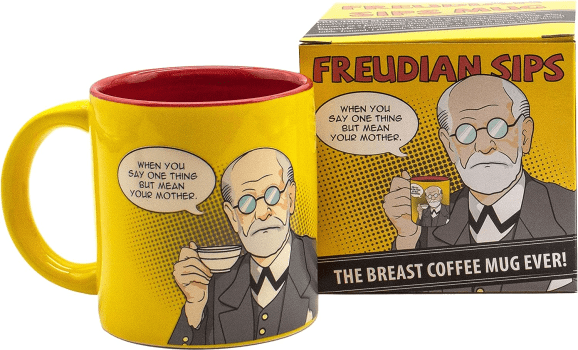
This clever mug features Freud (i.e., the “Father of Psychology”) sipping from a cup with a speech bubble reading, “When you say one thing but mean your mother.” The mug comes in a colorful box perfect for gift-giving.
This 2-1/4-inch Himalayan mood lamp rotates through a full spectrum of colors, each associated with a different mood or emotion to create feelings of tranquility and peace in any working or living space.
This whimsical spectacle holder is highly rated on Amazon for its charm and quirky design. Handcrafted with durable, lightweight materials, it’s the perfect desk accessory for any therapist who wears glasses; their spectacles will always be within reach, the frustration of misplacing them eliminated.
Sigmund Freud once said, “Being entirely honest with oneself is a good exercise.” What about being honest with everyone else? In this lighthearted game of analysis, players score points by giving the best responses and advice.
Unlike Pavlov’s dog, Pavlov’s cat is no drooling fool for a bell. He awaits the sound of the can opener! This is the perfect gift for the cat-loving counselor in your life.
The Work-from-Home Survival Kit is a fun and clever gift is for the private practice counselor who works remotely. Of the nine items included, a few are functional (ear plugs, webcam cover), others are just-for-fun (conference call bingo card, decision coin: pajamas or pants?), and the rest are in-between (fidget cube, desk yoga guide).
This fun Thumball helps players learn coping skills for anxiety while increasing social skills and having fun. It’s great for individual or group counseling with groups of all sizes.
These conversations blocks are sure to be excellent conversation starters. They’re also useful social skills and emotional learning tools, as well as icebreaker tools for therapists and counselors.
Click here for icebreaker question cards, a free alternative that you can print and cut yourself.
There are innumerable ways to love – and to grieve – when we’ve lost someone we love. This thoughtfully curated deck recognizes that “one-size-fits-all” doesn’t work for the grieving process. The cards are grouped into three categories: Action, Insight, and Prompt, and are a useful tool for therapists supporting clients with grief and loss.
The Life Sutra Couple Reconnect card deck was designed by Dr. Tania Sharma to enhance relationships by promoting deeper conversations. These cards are the perfect gift for the couples counselor in your life!
This set of six color-coded blocks contains 36 practices and thousands of possible combinations. Therapists can use these handy dice to help their clients discover calming meditations, positive mantras, soothing movements, controlled breathwork, mind-boosting journaling, and wellness goals… or as a part of their own self-care plan!
These cards are designed to help lead conversations about feelings, behaviors, triggers, and ways to control addictive impulses. Addiction counselors can use the cards in group or individual counseling sessions.
For a free alternative, click here for a DIY deck that you can print and cut yourself.
The Totika Therapy Game Self-Esteem Question Deck contains 150+ open-ended questions regarding self-confidence, motivation, role models, setting goals, and overcoming life challenges. It’s appropriate for kids, teens, and adults, and is the perfect gift for any therapist.
CBT (cognitive-behavioral therapy) involves challenging irrational thoughts and replacing them with more realistic (and positive) beliefs. Socratic questioning is one technique that therapists use to encourage this process. This bold canvas is the perfect gift for any CBT practitioner.
These beautiful handmade succulents are the perfect gift for the committed therapist who tirelessly attends to their clients’ needs… and in doing so, forgets that their plants need care too!
Grounding techniques help with distressing thoughts by bringing one’s focus to the present moment. This attractive sign depicts the 5-4-3-2-1 method, a grounding technique that’s both simple and effective.
Fun fact: My very first office was no bigger than a walk-in closet and, like most closets, had no windows. If you know a counselor whose office is similarly lacking in natural light, consider gifting them this handy LED lamp that mimics sunlight. (Their plants will thank you.)
With its intricate detail, this handmade wonderscape beckons clients to create mesmerizing patterns in the sand. The sculpture-like balls, with their weighted stability and textured surfaces, provide a soothing massage to the palm and fingertips. This captivating office accessory not only enhances the decor but also serves as a therapeutic tool for grounding and calm.
This thought-provoking pewter paperweight boldly and simply poses the question, “What would you attempt to do if you knew you could not fail?” It’s a powerful reminder of the possibilities that lie within each of us, and a fitting addition to any therapist’s office. Beyond its aesthetic appeal, it serves as a conversation starter, encouraging clients to explore their deepest aspirations and dreams.
This little tin sign helps to create a safe space while serving as a reminder of the limits of confidentiality. It’s a great gift for school counselors and family therapists.
Self-care is one of the first things counseling students are taught in grad school; in order to care for others, we must first take care of ourselves. Stress management is an important aspect of self-care; this acupressure cushion targets points in the head and neck to release stress-induced tension.
Aromatherapy is another great way to relieve stress. This easy-to-use roll-on blend can be applied anywhere at any time to instantly promote feelings of relaxation and calm.
Yoga is an amazing self-care tool; it enhances both physical and mental wellbeing. With this nifty card deck, the busy therapist can engage in 52 simple practices during the workday, all conveniently from their desk.
This soothing pillow is filled with a natural blend of eucalyptus, mint, and flax seeds, and features an organic cotton leaf design on the front and pure silk on the back.
Each foot spa set includes a detoxifying charcoal foot scrub, soothing moisturizer, rubber foot massage ball, and medical-grade gel toe separators. This pampering gift is perfect for counselors or anyone with weary feet!
After being diagnosed with generalized anxiety disorder in 2017, Emily June turned to embroidery to keep her hands busy and mind occupied, and found “the therapeutic joy of stitching.” This kit is a creative and meaningful gift for the crafty counselor in your life.
This novel approach to self-care offers 100 truths – or dares – on 50 sticks. Each stick has a thought-provoking question on one side and a challenging but achievable dare on the other. Gift your favorite counselor this fresh perspective on self-care, encouraging them to embark on a journey of personal discovery and growth.
Do you have ideas for gifts for therapists? Share in a comment below!
There are a multitude of ways mental health professionals can earn continuing education (CE) credits on various topics and through different routes to improve their professional abilities, broaden their knowledge, and stay current in the mental health field. That said, some CE credit offerings are more creative and innovative than others.
In this article, we’ll look at a few of these unique and cutting-edge alternative CE credit offerings that are available for the inventive therapist wishing to advance their professional development.
Professional licensing boards for mental health professionals require continuing education credits for license renewal. For example, mental health professionals in California must obtain 36 CE credits every two years to maintain their licenses. LMFTs, LCSWs, LPCCs, and/or LEPs all need to earn CEs annually.
Ultimately, CEs allow therapists to provide better care to the individuals they serve. There are a variety of methods and modalities in which professionals can earn these CEs, including online, through conferences, or at multiday workshops. Continuing education helps professionals recognize knowledge gaps as well as learn new skills. What’s more, they can network with others in the field and continue to advance in their career.
The Affirmative Couch is a committed advocate for the mental health of LGBTQIA+, consensually non-monogamous, and kink communities, working with both groups and individual providers. The organization was founded in response to the paucity of affirmative mental health care providers able to meet the needs of sexuality-, gender-, and/or relationship-expansive communities.
To address this problem, they take a multi-pronged approach: provide continuing education for affirmative psychotherapists, transform more group practices and clinics to become leaders in affirmative mental healthcare, empower beginner affirmative therapists with information, and create visibility of affirmative mental health professionals.
Current CE credit offerings range from $20 (1 CE) to $240 (12 CEs).
ALLEGRA Learning Solutions designs and develops continuing professional education courses, certificate programs, curricula, classes, and workshops for an interdisciplinary audience, including nurses, health care professionals, and other interested individuals.
With a focus on integrative health, wellness, and a holistic perspective, they are the premier education provider for those who wish to enhance their health care knowledge, skills and abilities. ALLEGRA Learning Solutions believe that individuals have the capacity to heal themselves and that health care providers must deliver care with intention and in partnership so people can tap into their own innate healing abilities.
Currently, course offerings range from $10 (for 1 contact hour) to $40 (for 4 contact hours) with certificate courses ranging from $64 to $272.
The Mission of the California Association for Play Therapy (CalAPT) is to sustain a community of support for play therapists and to promote an understanding of play therapy and its effective practice through outreach, training and research. They place a special emphasis on diversity and the developmentally appropriate treatment of children’s mental health.
Play therapy is a structured, theoretically-based approach to therapy that builds on the normal communicative and learning processes of children. Play therapy also may be used to promote cognitive development and provide insight about and resolution of inner conflicts or dysfunctional thinking in the child.
The registration fee for a workshop is around $100; CalAPT also provides free CE credit offerings for members.
Center for Council’s Council Training Level One (CT1) offers a thorough introduction to the pedagogy, modalities and forms of council practice and offers 15 CE credits. This workshop is an opportunity to develop your understanding of, fluency with, and capacity to engage in and facilitate council – a dialogic practice of authentic expression and attentive mindful listening – so as to integrate this evidence-based methodology into professional settings and personal practice.
Center for Council offers CT1 workshops throughout the year in the Los Angeles area and intermittently in locations throughout the US and Europe. Early bird registration fees start at $399.
Council Level Two and Level Three trainings are also offered for advanced practitioners who have completed Council Training Level One.
The Center for Reflective Communities (CRC) provides early intervention and parent training to enhance relationships between children and caregivers, leading to greater school readiness, increased academic achievement, and more productive lives. Their Reflective approach is especially effective in communities with risk factors including poverty, a history of loss or trauma, and other barriers to healthy child development and school readiness.
The Center for Story and Symbol offers continuing education seminars and workshops on the psychology of fairy tales, mythic stories, creativity, movies as mythic imagination, and law and ethics for psychotherapists. CE credit offerings are available for psychologists, marriage & family therapists, teachers, social workers, nurses, and other mental health professionals. Courses meet requirements in most states.
Online interactive courses that provide CEs cost $140 and home study CE courses are $95. (Non-CE courses can be purchased for a lower price.)
Clearly Clinical started out as Elizabeth ‘Beth’ Irias, LMFT’s passion project… she thought online CE credit offerings could use an upgrade. When she was a new therapist at a county-contracted facility, she went online for her CE courses because she didn’t have the money or time off for the in-person stuff. To her dismay, it seemed like the really great educational opportunities were reserved for the therapists with big wallets. Discouraged, she worked with what she had, and read online PDFs to get her CE credits.
As a result, Beth set out to create new online CE credit offerings* for therapists, social workers, psychologists, counselors, and addiction professionals that were affordable, meaningful, diverse, and accessible. “Why not podcasts?,” she thought.
Cognitive Leap offers efficient, objective, and fun assessment tools, as well as engaging treatment systems that bring children, families, and clinicians together to support lasting functional improvements. They aim to empower and extend the resource capacities of clinicians and therapists globally, especially in developing nations and communities where high-quality mental healthcare is in limited supply.
Cognitive Leap is committed to developing and providing non-stigmatizing approaches for treating mental health conditions that empower patients by recognizing their strengths and talents while removing their barriers to success.
LeapPlatform is a clinician education and training platform with Cognitive Leap’s APA-certified program in digital treatments administration with CE credit offerings.
The Cultural Foundations Credential (CFC) is a multidimensional learning process through which participants gain the foundational skills, awareness, and practice required for effective intercultural interactions. The principles of cultural humility, intersectionality, antiracism, and social justice inform each aspect of the program and provide structure for this holistic process designed to spark transformational change.
Workshops for organizations start at $2,250 (for up to 50 participants).
Discovery Behavioral Health believes that everyone deserves a happy, rewarding life. That’s why they connect people, professionals, and payors through a seamless network of evidence-based treatment centers in communities nationwide. They believe when access to care is easy, recovery is possible.
Currently, Discovery Behavioral Health does not provide CE credit offerings, but they publish articles on mental health, substance use, and recovery, as well as a treatment locator tool.
The Drama Therapy Institute of Los Angeles is accredited by the National Association for Drama Therapy as a training program for students and clinicians interested in the clinical applications of drama in therapy. It is a recognized and well-respected program at the forefront of drama, narrative, and creative arts therapy training, and offers an NADTA-approved alternative training track towards becoming a Registered Drama Therapist.
Drama therapy is the skilled and deliberate use of drama and theater to achieve therapeutic goals. It engages the imagination and involves participants intellectually, emotionally, and physically; it provides participants with a safe yet stimulating environment in which they can explore personal and family stories, set goals, uncover and express feelings, resolve problematic patterns, and (when appropriate), achieve catharsis.
Clinicians can register for courses such as Allies in Healing: Narradrama and Narrative Therapy and Dance Movement for Trauma for 1 CE credit offering per course hour.
Elevate You CE’s mission is to advance your skills, knowledge, and wellbeing so you can experience fulfillment and longevity in the mental health field. Elevate You CE knows how challenging your work can be and keep your wellbeing in mind when designing courses and coaching services.
Course fees range from $20 (for 1 CE) to $350 (for 12 CEs). A 30-hour Mindfulness Certification program is also offered for $799. Some examples of course offerings include Treating Grief After the Loss of a Pet, A Successful Path to Body Acceptance, and Getting the Shame Out of Substance Misuse.
Feeling Good Institute is on a mission to improve lives. It was born to set the standards, train, organize, and support the therapist community practicing a highly effective form of Cognitive Behavioral Therapy (CBT) called TEAM-CBT.
Developed by Dr. David Burns, TEAM-CBT is eight times more effective than other treatment approaches. Clients see a 30% average reduction in suffering per therapy hour and meaningful improvement within 5 sessions.
In addition to comprehensive training courses, Feeling Good Institute offers free 1-hour webinars that introduce participants to basic CBT skills.
A Home Within is the only national organization dedicated solely to meeting the emotional needs of foster youth. They envision a world in which every foster child has a relationship with at least one consistent, caring adult. They provide open-ended, individual psychotherapy, free of charge, to current and former foster youth.
While A Home Within does not currently provide CE credit offerings, they publish clinical resources and tools for mental health professionals.
Illuminated Education provides educational activities designed for people who are interested in issues related to psychology, healing, and other aspects of human thought, feeling, and behavior. The goal is to present up-to-date, thought-provoking content integrating material from psychology and other fields including (but not limited to) mind-body medicine, mindfulness practice, and eastern and shamanic approaches to health and healing.
CEs are offered for reading a journal article or other publication and then passing a test. Fees range from $10 (for 1 CE) to $90 (for 9 CEs).
16. Institute on Violence, Abuse, and Trauma (IVAT)
The Institute on Violence, Abuse and Trauma (IVAT) condemns violence and oppression in all its forms. They stand with all who work for equality and peace.
IVAT is a one-stop shop to address and end violence. They host two international summits annually, house three academic journals, maintain several research databases, provide program evaluation, consultation, and a wide array of trainings addressing violence, abuse, and trauma – many of which can be used toward specialty certificates and continuing education, and offer vital professional and clinical services to San Diego County and beyond.
Webinar training fees range from $20-$35 and offer 1-2.5 CEs.
For over three decades, two questions have driven the therapy orientation of Natural Processing Trainings: “How does our nature work, and how can we best work with that nature?” These questions have led them to find ways to work with the potential movement and integration of our mental, emotional, physical, and spiritual natures.
“Natural processing” is the somatically-based, process-oriented therapy that emerged from the integration of multiple approaches to healing and growth.
Course fees range from $40-$375 (for 13.5 CE hours).
The Pacific Anxiety Group was founded by Stanford-trained clinical psychologists with expertise in the treatment of anxiety, stress, and depression.
The Pacific Anxiety Group is dedicated to training the next generation of evidence-based clinicians. They offer a practicum training program and postdoctoral training/psychological assistantships. PAG is also approved by the American Psychological Association to sponsor continuing education for psychologists.
The Relationship Training Institute was established to provide training, consultation, treatment, and research in the field of relationship development and relationship enhancement.
Organizational training opportunities are listed here with upcoming workshops listed here.
Soultenders is committed to making quality mental health services accessible to all by offering licensed mental health providers with their administrative needs so they can focus on their clients and their private practice instead of the paperwork.
Soultenders provides CE credit offerings that go further than meeting the requirement standard and also meet the professional needs of therapists. They offer CEs for social workers, psychologists, counselors, and MFTs. (Registration required to enroll in courses.)
The Spiritual Competency Academy offers mental health professionals a selection of over 30 unique online courses that provide the skills and knowledge to become more spiritually competent. Their foundational curriculum starts with a course on how to conduct an evidence-based and spiritually sensitive spiritual assessment. Other courses cover a wide variety of topics including self-compassion, mindfulness, and forgiveness.
All courses are free to enroll in (after registering for a free account); CEs are offered for a fee (averaging around $10 per credit hour).
After experiencing the powerful and profound changes that can occur through partnership with horses, Stand InBalance founder Dr. Val transitioned from her private practice in Santa Monica to developing the Stand InBalance Ranch.
Stand InBalance is proud to offer innovative CE courses for psychologists, LMFTs, LCSWs, and addiction treatment counselors. Their small group CE workshops and retreats provide a combination of didactic and experiential learning designed to enhance clinical skills, and bring more joy and resonance to your life and practice.
Examples of CE courses offered for mental health professionals include Intro to Equine Assisted Psychotherapy, Growth & Learning Workshop,Countertransference and Restorative Experience Workshop, and Moving from Resistance to Resonance.
Two Chairs believes that high-quality care starts with taking care of clinicians. They are building a mental health system that takes care of you by prioritizing your personal wellbeing, providing opportunities for growth and connection, and empowering you to do work you enjoy.
For free CE credit offerings, join the Two Chairs Clinician Community.
A Window Between Worlds (AWBW) believes that creating art is a human right. They exist to empower individuals and communities impacted by violence and trauma through a transformative healing arts program.
AWBW views art as a catalyst to release trauma, build resilience, and ignite social change. When individuals create art in a safe community they can be heard and respected – replacing violence and shame with safety and hope.
Earn CEs by registering for a Windows Facilitator Training where you will get everything you need to implement art programming and become a Certified Windows Facilitator, as well as gain ongoing access to an expanding curriculum of 600+ strengths-based art workshops and free professional development opportunities.
The Zur Institute provides a variety of learning modalities and address challenges professionals are likely to routinely encounter. Their content embraces diverse approaches and orientations, and recognizes the importance of addressing diversity across a broad-spectrum including, but not limited to, culture, race, age, gender, sexual orientation, and socioeconomic variables.
The Zur Institute currently has over 120 unique courses with CE credit offerings ranging from $19 (for 1 CE) to $199 (for 26 CEs). Additionally, sign up for their newsletter for free resources and promotions.
To conclude, online trainings, podcasts, webinars, and in-person workshops are a fantastic method to discover the most recent developments and evidence-based treatments in the field of mental health. CE credit offerings are a great approach to advance knowledge and expand expertise while maintaining the standards for licensure. For therapists wishing to advance their professional development, there are numerous innovative and creative CE credit offerings to choose from.
ABOUT THE AUTHOR:
Sydney Scanlon, Executive Development Specialist, Center for Council
Sydney Scanlon has been working in nonprofits across the world focusing on issues of healthcare, education, equity, and mental health. She has published research experience in climate change and health, childhood trauma, and psychedelic therapy. She has been working in marketing and design for universities, nonprofits, and musicians.
This is a list of 50 unique gift ideas for therapists and mental health counselors in 2022. Gifts under $10, books, therapy toys, office décor, and more!
Amazon: “In her refreshingly blunt #1 New York Time’s bestseller, You Are a Badass, Jen Sincero served up hilariously inspiring stories, sage advice, and the occasional swear word, all with the goal of helping readers reverse self-sabotaging behaviors and create a life they love. You will love this badass kit, which includes an 88-page mini abridgement of Sincero’s irreverent guide and a Badass Button for your desk, kitchen, or bedroom that spouts inspiring messages in Sincero’s own voice. It’s the perfect anytime reminder that ‘You are a badass!'”
What comes to mind when you hear the term psychotherapy? Lying on a couch and recounting the details of a dream you had while being psychoanalyzed by a man who silently takes notes? This sofa-shaped business card holder is the perfect gift for any therapist or psychologist, regardless of their theoretical orientation!
The perfect gift for the therapist in your life who loves tacos. For more taco-themed therapy stickers and gifts, check out what Etsy has to offer. Here are a few of my favorites:
A fun prop for asking variations of “the miracle question.” (You may be unfamiliar with this concept, but every counseling grad student or master’s-level counselor knows the miracle question!)
Amazon: “From the bestselling international coloring book series, Color Yourself Calm. Creating beautiful art can be a positive and relaxing experience. This kit includes 10 colored pencils and 50 illustrated cards with detailed designs to complete. Lift your mood and focus your mind – no drawing skills required!”
Psychology Today publishes content written by clinicians, experts and researchers from across the fields of behavior and psychology. It is the original and largest publishing enterprise that is exclusively dedicated to human behavior. The magazine has received numerous awards for both editorial and design, and is published six times a year.
It’s here! The long-anticipated revised text of the DSM-5 arrived this year, and it includes a new diagnosis – prolonged grief disorder – as well as new diagnostic codes for suicidal behavior, plus much more. Every therapist needs a copy of their own!
If the DSM-5-TR isn’t in your budget, consider this handy, spiral-bound desk reference for a third of the price.
Amazon: “The Desk Reference to the Diagnostic Criteria from DSM-5-TR is a concise, affordable companion to the ultimate psychiatric reference, DSM-5-TR. It includes the fully revised diagnostic classification, as well as all the diagnostic criteria from DSM-5-TR in an easy-to-use format. This handy reference provides quick access to the information essential to making a diagnosis. Designed to supplement DSM-5-TR, this convenient guide will assist all mental health professionals as they integrate the DSM-5-TR diagnostic criteria into their diagnoses.”
A jar of f*cks to give. (Buy on Amazon, or even better, DIY with a mason jar and wooden cutouts!) This is the perfect tool for illustrating the concept of how in life, there are only so many things we can give a f*ck about – it’s important to figure out which ones matter the most. (A great companion to the #1 New York Time’s bestseller, The Subtle Art of Not Giving a F*ck: A Counterintuitive Approach to Living a Good Life.)
“So you have chapped lips. Stop blaming your mother.” Freudian slips… and eucalyptus… for the lips! Oral fixation lip balm with all natural ingredients.
Amazon: “A wistful, honest and highly relatable account of modern life. Dinosaur Therapy is a book of cartoons for grown-ups from the very successful web comic @dinosandcomics. In each comic, dinosaur characters grapple with questions around the meaning of life and mental health, trying to make sense of the world and cope with their own place in it.”
Amazon: “Guided by Michael A. Britt, creator of popular podcast The Psych Files, you can conduct your own experiments when browsing your favorite websites (to test the “curiosity effect”), in restaurants (learning how to increase your tips), when presented with advertisements (you’d be surprised how much you’re influenced by the color red), and even right on your smartphone (and why you panic when you can’t find it). You’ll even figure out how contagious yawning works!”
An Amazon bestseller! “Living your values increases your compassion, reduces your stress, enhances your confidence, and allows you to experience more intimacy in your relationships. These 78 cards offer you a practical set of tools for determining your core values and practicing them in your daily life. Start off with a simple sorting exercise, then dive deeper into your highest values with the prompts and activities listed on each card.”
A 24″ inflatable ball that features questions, quotes, and positive affirmations to help clients to open up; this therapy tool inspires new ways of thinking about coping with anger. (Alternatively, you may want to consider the Toss ‘n Talk-About Addiction Ball for $22.99 on Amazon.)
Amazon: “Help young kids talk about their own feelings and learn to empathize with others. This learning faces toy is fun to play with and a great conversation starter. Children can play independently, recreate a story, or describe their own feelings.”
Great for group therapy. Includes laminated game cards, calling cards, chips, reproducible handouts, and instructions. (Wellness Reproductions & Publishing also offers bingo kits for coping skills, stress management, social skills for teens, and more. If you’re looking for something fancier, check out The Coping Game from Wellness Reproductions & Publishing for $59.95 on Amazon.)
An adorable plush brain with neurons and neurotransmitters for illustrating how mental illnesses such as depression, anxiety, or ADHD disrupt mental functioning.
A fun icebreaker activity for groups. Perfect for the therapist who works in a hospital or residential setting, or who does group therapy. “This cute, compact tin is filled with 50 hilarious and thought-provoking questions asking players to choose between two equally good, unpleasant, or absurd scenarios.” (Alternatively, consider Googling “would you rather” scenarios and make your own cards or worksheets!)
For 24 free DYI icebreaker cards to print and cut, click here.
Amazon: “Includes one Totika Therapy Game Cube and six decks of Totika question cards, each deck with 150-188 questions, prompts and scenarios for a total of more than 1,000 interventions. The Early Childhood Social Emotional card deck is for ages 4-7 and the Teen-Adult Principles/Values card deck is for ages 13 to adult. The Anger, Resilience, Bullying, and Icebreakers cards are for ages 8 and up.”
Amazon: “With 2 pounds of kinetic sand and 3 tools, immerse yourself in a soothing and mesmerizing sensory experience! This fidget box is perfect for stress relief – play, relax and unwind!”
Amazon: “This set is a companion to the bestselling books ‘A Little SPOT of Emotion Books Box Set!’ This set comes with a newly released hardcover special edition ‘A Little SPOT of Feelings‘ book with all 8 Emotion plush toys! The PLUSH TOY EMOTIONS included are: Anger, Anxiety, Peaceful, Sadness, Happiness, Love, Confidence and Scribble (Tangled). The book included features a bonus mirror in the back of the book along with a FEELINGS POSTER that is printed on the inside of the dustjacket. The poster and mirror were added to help children identify facial expressions.”
Currently on my own Amazon wish list! Both soothing and decorative, a great addition to any office space. (Hint: Watch the price on this one! While working on this post over the course of a few days, the price increased from $22.99 to $29.70 and has since decreased to $19.94.)
For a cheaper version, create your own sign using Canva – then print and frame! Alternatively, try making a sign with sticker letters from Dollar Tree.
A mini label making machine for the therapist who loves staying organized! (Another item to watch for price changes; it went from $30.59 to $36.99 in one day. Now it’s only $19.99. Alternatively, there are plenty of cheap label makers that also have high ratings on Amazon.)
Amazon: “Himalayan salt lamps give your home, business, store or lounge a beautiful and relaxing atmosphere. Not only does it help enhance the mood, its amber glow gives the ambience a special interior design experience.”
Amazon: “This desk décor item will remind you to focus on what you can control and stop worrying about things you can’t control. Perfect office décor for any psychologist, counselor, social worker, teacher, or therapist!”
Amazon: “This unique Stress Less Cards deck contains 50 extremely effective exercises to help you relieve stress and deal with anxiety whenever you need it the most. Easy for everyone to use, these powerful techniques can be quickly memorized and used in any situation; on the bus, at work, at your desk, while queuing at the supermarket or before going to bed at night. These exercises are designed to stop that stress reaction and help you relax.”
Amazon: “This gift is an encouragement not only to believe in oneself more, but to do more and be more of what you want to be in your life. Love yourself, embrace yourself and never stop moving forward.”
For a free DIY set of inspirational quote cards, click here.
50 individually wrapped wipes for feeling clean and refreshed throughout the day! (For the “man’s man” counselor, consider these Dove Men+Care Deodorant Wipes for $12.99 on Amazon as an alternative.)
Another one from my own Amazon wish list. It’s a little pricey, but top-rated! “The massage chair utilizes innovative 2D/3D finger pressure shiatsu, rolling, compression, vibration and heat functions to provide you an omni comfortable massage to the back like a spa massage.”
What are some of your unique gift ideas for therapists? Post in a comment!